
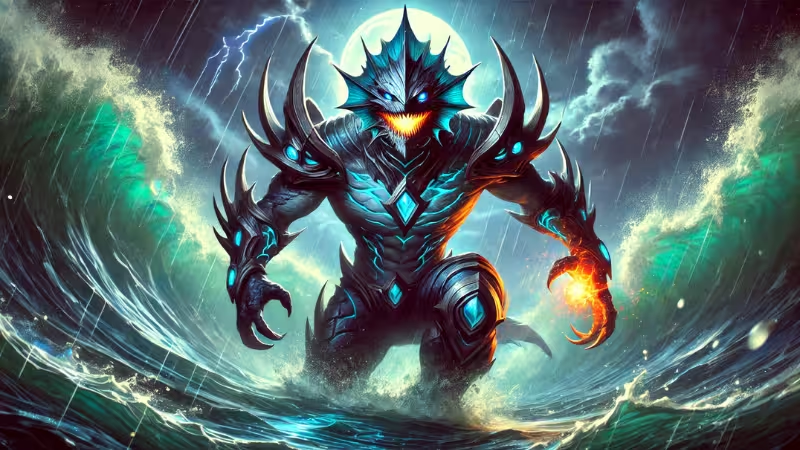
Slark wins games by showing up where enemies feel safe. He jumps in, steals stats, then slips out before the counterplay lands.
This guide focuses on practical Dota 2 Slark Tactics: how to lane, when to fight, how to time Dark Pact, and how to turn vision into an advantage.
Table of Contents
What Slark Is Good At (and What Breaks Him)
Slark is a slippery melee carry with multiple escape paths. He excels at mid-game pickoffs and long fights where Essence Shift stacks get out of control.
He struggles when enemies bring layered crowd control, especially AoE disables and undispellable control. He also feels weak when he falls behind, since he depends on stacks and item timing.
Strengths that matter in real games
Slark’s best games come from taking fights on his terms. He can enter a skirmish, get several Essence Shift stacks, leave vision to heal, then re-enter.
His night vision is 1800, which is a large edge for night moves and ganks. Use that to start fights first instead of reacting late.
Weaknesses you must respect
Slark is fragile early and has low attribute growth. If you take bad trades before level 6, recovering is slow.
Crowd control is the main reason Slark dies. If multiple heroes can lock you down at once, you need to play for patience and timing, not constant diving.
Lane Plan and Early Skill Choices
Slark is usually played safelane with a support, and can also be played offlane. Mid Slark exists, but he struggles against ranged heroes like Queen of Pain.
Your early levels decide if you reach the mid game strong enough to hunt. You want early kill threat without burning all your mana.
Level 1: choose the point that fits the lane
Against a melee opponent, consider Essence Shift at level 1 to improve harassment. It pressures their stats and makes trades worse for them over time.
Against damage-over-time lanes, consider leveling Dark Pact earlier. The dispel timing gives you a way to survive effects that would normally force you out.
Level 3: get all basics
At level 3, put a point in each basic ability. That setup gives you escape, control, and damage, which is needed for early kills and for living through counterplay.
Standard skill priority
Max Dark Pact first since the AoE damage and lowered mana cost help you farm waves and neutral camps quickly.
Max Pounce second for longer leash duration and lower cooldown. That matters because it lets you use Pounce to both start a fight and escape the same fight.
Max Essence Shift last, because the main scaling listed is duration. That does less for early fights than extra Pact damage and better Pounce uptime.
Mid-Game Hunting: Where Slark Gets Rich
Slark is a potent ganker in the mid game. He should look for isolated heroes instead of joining every 5v5 fight.
The enemy jungle is a strong hunting ground because you can move between camps fast and cut off retreat paths. Your large night vision helps you spot supports moving between wards and camps at night.
Hit-and-run is not optional
Slark differs from many carries because he trades health for time. You don’t need to win every second of a fight.
Shadow Dance regeneration when unseen lets you leave vision and come back healed. That makes drawn-out fights good for you, as long as you avoid getting chain-stunned.
Stack camps while you move
Slark can stack 2, even up to 3 camps with mobility and Pounce. Do it when there’s no clean kill available.
That habit keeps your farm moving while you wait for supports to show.
Dark Pact Tactics: Dispel Timing Wins Fights
Dark Pact is the core of how Slark survives control. It has a delay, then pulses damage while applying a strong dispel on Slark before each pulse.
What Dark Pact actually does (from your notes)
After you cast, there is a 1.5 second delay. Then Dark Pact deals damage in 0.1-second intervals for 10 instances within a 325 radius, for a total of 75/150/225/300 damage.
Slark also damages himself during the same pulses but takes 0.3 of that damage, and the self-damage is never lethal. The strong dispel happens in the pulse sequence, so timing is everything.
Timing rules you can rely on
Cast Dark Pact after you Pounce when you initiate. The cast is instant, so you can press it as the target tries to disable you without interrupting your attacks.
If you expect a projectile stun like Storm Hammer or Unstable Concoction, cast Dark Pact right before it lands. After the projectile hits, a pulse can remove the disable.
Using Dark Pact with invis and farming
If you’re being chased, using Dark Pact before Shadow Blade can dispel Dust of Appearance without losing invisibility. That’s a clean escape pattern when the enemy uses Dust to chase.
Dark Pact also accelerates farm between ganks. Use Power Treads toggling to reduce the mana strain: shift Treads to intelligence before casting, then strength during the damage, then agility after.
Pounce Tactics: Leash Control and Clean Escapes
Pounce is not just a gap close. It decides whether a target can leave, blink, or teleport.
Pounce leaps forward up to 700 range, and with Aghanim’s Scepter it reaches 1000. It can latch on heroes within a 120 latch radius, then leashes them to a 400 radius zone for 2.5/2.75/3/3.25 seconds.
Pounce basics you should practice
Slark always leaps toward the direction he is facing. Make sure he fully turns before you cast, especially near cliffs or trees.
Pounce can go over elevations and barriers. Use that to escape when enemies chase in a straight line.
What Pounce stops (and doesn’t stop)
Pounce does not stop an enemy from attacking or using abilities. It restricts movement and blocks certain mobility tools while the leash is active.
It can disrupt teleport scrolls, and it can disable blink-style movement during the leashed duration. It can also hit invisible heroes if you cast right after they vanish, then follow with Dark Pact for AoE damage that still affects invis targets.
Root and debuff immunity notes
Pounce cannot be cast while rooted or leashed. Rooting you mid-leap does not cancel the leap, but it will stop you from casting Pounce again until free.
Pounce “does not pierce debuff immunity” for the leash/slow. If a unit is debuff immune, it won’t be properly leashed until immunity ends.
Essence Shift Tactics: How to Win Long Fights
Essence Shift is the engine of Slark’s snowball. Each hit steals attributes from enemy heroes and converts them into agility for Slark.
From your notes: each stack steals 1 Strength, 1 Agility, 1 Intelligence from the enemy, and grants Slark 3 agility per attack. Duration scales up to 20/40/60/80 seconds, and if Slark kills an affected enemy hero, he permanently steals +1 agility.
Why Essence Shift changes fights fast
Stealing stats reduces more than damage. It lowers enemy max health, regen, mana, mana regen, armor, attack speed, and attack damage.
With enough stacks, enemies struggle to fight back and struggle to cast spells due to reduced mana. This is why Slark wants fights that last longer than a normal burst trade.
How to stack safely
Harass, back off, then re-engage once you have stacks. Don’t commit to a kill just because you landed a Pounce.
After a large fight, if you’ve built big agility, push objectives fast. Your notes mention it’s common to reach very high stolen agility, which makes towers and Roshan easier if the enemy can’t contest.
Shadow Dance and Vision Control
Shadow Dance is both survival and information. The active turns Slark invisible and immune to detection, and attacking or casting does not reveal him.
The passive gives movement speed and health regen when the enemy does not have vision on Slark. Your notes highlight a key tactic: use the passive as a detection tool.
The “buff drop” ward test
If you suddenly lose the Shadow Dance passive movement speed and regen, the enemy has vision on you. That often means a nearby Observer Ward, a Hawk, or an invisible enemy.
Watch the Shadow Dance buff icon while moving through common ward areas. If it drops, back up and approach from a new angle.
When to press Shadow Dance
In general, activate Shadow Dance when you are low health, not at the start of fights. That gives you the biggest swing since the regen can carry you out of lethal range.
Sometimes you should press it at high health to protect against disabling abilities like Laser or Doom. This is about preventing the chain control that kills Slark.
What Shadow Dance does not solve
Enemy AoE still hits you for full damage. If you stay inside large area spells or get body blocked by creeps and illusions, you can still die even with Shadow Dance active.
Item Plan
Below is the item flow from your notes, grouped by timing. Use it as a template, then adjust based on disables and how the game is going.
- Starting: Tango, Healing Salve, Iron Branch (into Magic Wand), Quelling Blade
- Early: Boots of Speed, Orb of Venom, Magic Stick
- Mid: Power Treads (toggling matters), Magic Wand, Shadow Blade, Echo Sabre
- Late: Eye of Skadi, Abyssal Blade
- Situational: Drum of Endurance, Diffusal Blade, Sange and Yasha, Black King Bar (can be rushed by disassembling Echo Sabre), Butterfly, Silver Edge, Orchid Malevolence, Bloodthorn, Monkey King Bar, Aghanim’s Scepter (Pounce charges + range), Aghanim’s Shard (Depth Shroud), Moon Shard (consume later)
Why a few of these matter for Slark’s kit
Eye of Skadi helps you stay on targets so you can keep stacking Essence Shift. Abyssal Blade helps you lock targets down so they can’t reset or escape during your stacking window.
Aghanim’s Shard gives Depth Shroud, which creates a cloud that applies Shadow Dance to allies inside it. It has a short delay before it takes effect and lasts briefly, so treat it like a fight reset tool, not a long-duration save.
Putting It Together: A Simple Fight Script
Start fights by picking a target that can’t instantly AoE-stun you. Approach from angles where you can break vision quickly after.
Pounce to start, then Dark Pact as the enemy tries to disable you. Keep hitting to build Essence Shift, then leave vision if you drop too low, and re-enter once the regen has done its work.
Final Thoughts
Slark looks strongest when he controls the pace: short entries, stacking hits, and clean exits. If you force enemies to guess where you will strike next, you get the fights you want.
Your next improvement point is timing. Put more focus on Dark Pact timing and Shadow Dance vision reads, and your pickoffs will turn into towers instead of risky chases.
Don’t forget to check out Strafe Esports for all the latest Dota 2 news and our X account for the latest content and coverage.







0 Comments