
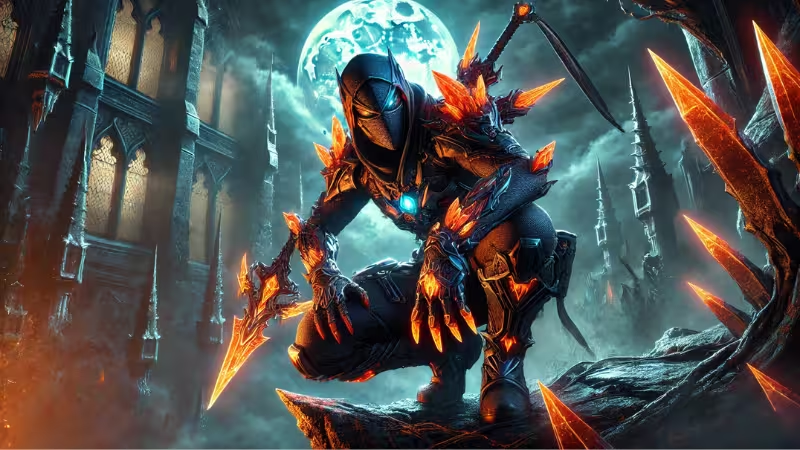
This League of Legends Varus Guide explains how Varus works as both a character and a champion. Varus is a Darkin marksman built around long-range damage, ability timing, and burst windows. He rewards players who manage positioning, cooldowns, and Blight stacks with precision.
This guide covers Varus’ lore, abilities, item builds, playstyles, and matchup awareness. It focuses on clarity and accuracy, using only the information provided.
Table of Contents
Varus Lore: The Darkin Within
Varus is one of the ancient Darkin, known for cruelty and psychological torment. He did not simply kill his enemies. He broke them before delivering the final arrow.
At the end of the Great Darkin War, Varus was imprisoned within his bow. Centuries later, two Ionian hunters unknowingly freed him. Their bodies became his vessel, trapping their souls alongside his essence.
Varus now hunts those who sealed him away. The mortal souls within resist his control, creating constant internal conflict. This struggle defines his identity and mirrors his gameplay, where power is balanced by limits and timing.
Varus Role and Core Strengths
Varus is primarily played as a marksman. He relies on range, burst damage, and ability synergy rather than mobility.
He excels at:
- Long-range poke
- High burst through Blight detonations
- Strong teamfight control with his ultimate
His weaknesses include:
- No built-in mobility
- High vulnerability to crowd control
- Heavy reliance on positioning
Good Varus players win fights before enemies can reach them.
Living Vengeance: Passive Power Windows
How Living Vengeance Works
Living Vengeance triggers when Varus kills an enemy. He gains bonus attack speed and bonus attack damage and ability power based on that attack speed.
Champion takedowns grant a much stronger version of the buff. While active, Varus’ attack speed cap increases to 3.
This passive creates short power windows. During these moments, Varus becomes significantly more dangerous.
How to Use the Passive Effectively
During lane, the buff often triggers after last-hitting minions. Smart opponents wait for it to expire before trading.
In teamfights, a single kill or assist can swing momentum. Good positioning is critical once the buff activates, since enemies will try to disengage or focus Varus down.
Piercing Arrow: Long-Range Threat
Ability Overview
Piercing Arrow is Varus’ signature ability. He channels to increase its range and damage while slowing himself.
Recasting fires a powerful arrow that deals physical damage. Damage increases with channel time but is reduced when hitting multiple enemies.
Blight stacks detonated by Piercing Arrow gain bonus damage based on charge time.
Best Practices for Piercing Arrow
Piercing Arrow does not need full charge to be effective. In close fights, quick casts often lead to higher damage since Varus can return to auto-attacking faster.
The ability has a clear visual and sound cue. Casting from brush helps reduce reaction time from enemies.
Piercing Arrow can also secure objectives. Varus can steal Dragon or buff camps from long range if timed correctly.
Blighted Quiver: Varus’ Core Mechanic
Passive: Blight Stacks
Blighted Quiver empowers Varus’ basic attacks to deal bonus magic damage and apply Blight stacks. These stacks last six seconds and can stack up to three times.
Varus’ abilities consume Blight stacks on hit. Each stack deals percentage max health magic damage.
Against champions and epic monsters, consuming stacks reduces the cooldown of Varus’ basic abilities.
Active: Empowered Piercing Arrow
Blighted Quiver’s active empowers Varus’ next Piercing Arrow to deal bonus magic damage based on missing health.
If Varus does not fire Piercing Arrow, the ability can be recast to cancel it. This gives flexibility during fights and lane pressure.
Blighted Quiver defines Varus’ damage pattern. Three auto attacks followed by an ability is the core rotation.
Hail of Arrows: Zone Control and Utility
Ability Overview
Hail of Arrows deals physical damage in an area after a short delay. The zone slows enemies and applies Grievous Wounds for four seconds.
It can consume Blight stacks twice due to a delayed secondary trigger.
When to Use Hail of Arrows
This ability is strongest against champions who rely on healing. It is also useful for escapes, kiting, and catching fleeing enemies.
In lane, it helps control space and force opponents away from minion waves.
In teamfights, it limits movement and reduces sustain during extended fights.
Chain of Corruption: Teamfight Control
Ability Overview
Chain of Corruption fires a tendril that roots the first enemy champion hit and applies full Blight stacks.
The corruption spreads to nearby enemy champions if they stay within range. Each infected target can spread the effect further.
The root reveals affected targets but does not interrupt channels.
How to Use the Ultimate Correctly
Chain of Corruption works best when enemies are grouped. It can start fights, punish poor positioning, or protect Varus during retreats.
Targeting melee champions often yields better results. Ranged champions can still attack while rooted.
Spacing matters. Enemies who move away quickly can prevent the spread.
Recommended Item Builds
Summoner’s Rift Core Items
Varus commonly starts with Doran’s Blade, Health Potion, and Warding Totem.
Core items include Essence Reaver, Berserker’s Greaves, and Statikk Shiv. These support sustained damage and ability usage.
Infinity Edge is strongest when ahead. Bloodthirster offers sustain when behind. Lord Dominik’s Regards helps against armor-heavy teams.
Situational Choices
Mercurial Scimitar helps against crowd control. Guardian Angel provides safety in late fights. Blade of the Ruined King adds sustain and percentage damage.
Build choices should reflect enemy threats and game state.
Alternative Playstyles
AP and Hybrid Varus
Varus can be played as an AP or hybrid build. This style focuses on Blighted Quiver’s percentage health damage and Chain of Corruption’s AP scaling.
Nashor’s Tooth is a core item due to attack speed, ability power, and cooldown reduction. Lich Bane adds burst after detonations.
This build is weaker early but becomes dangerous later. Positioning remains critical.
AD Caster Varus
AD caster Varus focuses on poke damage with Piercing Arrow and Hail of Arrows.
Items like Black Cleaver, Youmuu’s Ghostblade, Manamune, and Ionian Boots of Lucidity support this style.
This approach emphasizes range and spell usage over auto attacks.
Playing as Varus
Early lane success depends on spacing and timing. Blighted Quiver helps secure last hits and trade damage.
During skirmishes, avoid overcharging Piercing Arrow unless range is required. Maintain a steady rhythm of three attacks followed by an ability.
Teamfights demand patience. Varus thrives when fights begin at range and enemies enter his threat zone slowly.
Playing Against Varus
Varus struggles against high mobility champions. Dodging his skillshots reduces much of his damage.
Engaging after he uses Piercing Arrow and Hail of Arrows limits his ability to detonate Blight stacks.
Crowd control is effective. Once caught, Varus has few escape options.
Avoid grouping tightly when his ultimate is available.
Closing Thoughts
Varus rewards discipline. His damage comes from preparation, not reaction. Players who control spacing, manage cooldowns, and choose the right moments to commit will find Varus reliable in both lane and teamfights. Mastery comes from understanding when to wait and when to strike.
Welcome to Juked, your premier destination for all things LoL gaming and esports. Stay up to date with Match Schedules, News, and Guides.








0 Comments